
1. By Overarching Philosophy (The “Big Picture” Approaches)
These are strategic frameworks that guide all marketing activities.
- Digital Marketing: The umbrella term for all marketing efforts that use the internet or electronic devices. It’s measurable, interactive, and includes SEO, social media, email, and more.
- Traditional Marketing (or Offline Marketing): The classic forms of marketing that existed before the internet. This includes TV and radio commercials, print ads, billboards, direct mail, and telemarketing.
- Inbound Marketing: A methodology focused on attracting customers by creating valuable content and experiences tailored to them. The goal is to “pull” interested people in, rather than interrupt them. It relies heavily on content marketing, SEO, and social media.
- Outbound Marketing (or Interruption Marketing): The traditional approach of pushing a message out to a broad audience through paid channels. Think TV ads, cold calling, and display ads. It’s often less targeted than inbound.
- Relationship Marketing: A strategy that focuses on customer retention and long-term engagement. The goal is to build strong, lasting relationships to foster loyalty and repeat business.
- Word-of-Mouth Marketing (WOMM): Encouraging people to organically share a positive message about a brand, product, or service. This is often considered the most powerful form of marketing because it’s based on trust.
- Guerrilla Marketing: Unconventional, low-cost marketing tactics that aim to achieve maximum exposure through surprise, creativity, and personal interaction. Often used by small businesses to create a “buzz.”
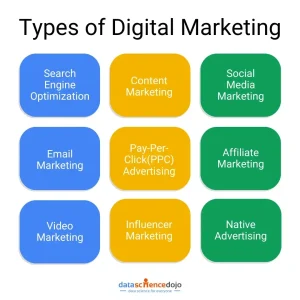
2. By Digital Channel & Tactic
These are the specific tools and platforms used in modern marketing strategies.
- Content Marketing: Creating and distributing valuable, relevant content (blogs, videos, podcasts, infographics) to attract and retain a defined audience.
- Search Engine Optimization (SEO): The process of optimizing a website to rank higher in organic (non-paid) search engine results, like Google.
- Search Engine Marketing (SEM) / Pay-Per-Click (PPC): Using paid ads on search engines (like Google Ads). Advertisers pay a fee each time their ad is clicked.
- Social Media Marketing (SMM): Using social platforms (Facebook, Instagram, LinkedIn, TikTok, X) to build a community, promote content, and run paid advertising.
- Email Marketing: Sending commercial messages to a group of people via email. It’s highly effective for nurturing leads and driving conversions.
- Affiliate Marketing: A performance-based model where a business rewards one or more affiliates for each customer or visitor brought by the affiliate’s own marketing efforts.
- Influencer Marketing: Collaborating with individuals who have a dedicated social following to promote a product or service to their audience.
- Video Marketing: Using video content (on YouTube, social media, or a website) to engage an audience and convey a marketing message.
3. By Business Model or Context
These types are defined by the specific way a business operates and sells.
- B2B (Business-to-Business) Marketing: Marketing products or services to other businesses. The sales cycle is often longer and relies on logic, ROI, and building professional relationships.
- B2C (Business-to-Consumer) Marketing: Marketing products or services directly to individual consumers. The messaging is often more emotional and focused on immediate benefits.
- C2C (Consumer-to-Consumer) Marketing: Marketing that facilitates transactions between consumers, often on a platform like eBay, Etsy, or Facebook Marketplace.
- Service Marketing: Marketing intangible products (like consulting, insurance, or legal services). It heavily emphasizes trust, expertise, and customer experience.
- Product Marketing: Marketing physical goods. It focuses on the product’s features, benefits, and differentiation from competitors.
- Personal Branding: The process of marketing individuals and their careers as brands. Common for consultants, speakers, and creators.
4. Other Important & Niche Types
- Global Marketing: Developing and executing marketing strategies on a worldwide scale, while considering cultural, linguistic, and legal differences.
- Social Media Marketing: (Also listed under digital) Using social platforms to connect with an audience.
- Viral Marketing: A phenomenon where content spreads rapidly and organically across the internet, similar to a virus. It’s often a goal but difficult to engineer predictably.
- Event Marketing: Creating a branded experience through live or virtual events (conferences, webinars, pop-up shops) to connect with an audience directly.
- Partnership Marketing (Co-Marketing): Two or more brands collaborating on a campaign to reach a new, relevant audience.
How to Choose the Right Type of Marketing
There is no single “best” type. The right marketing mix depends on:
- Your Target Audience: Where do they spend their time? What do they care about?
- Your Business Goals: Are you trying to build brand awareness, generate leads, or drive direct sales?
- Your Product/Service: Is it a complex B2B software or an impulse-buy consumer good?
- Your Budget: A small business might start with content and social media, while a large corporation might use TV ads and global SEM campaigns.
- Your Resources: Do you have an in-house team, or will you outsource?
The most successful companies use an integrated marketing strategy that combines several of these types to create a cohesive and powerful presence.
[INSERT_ELEMENTOR id=”17″]