
The Core Philosophy for 2026
- Fundamentals First, Then Specialize: Don’t jump straight into the trendiest tech. A rock-solid understanding of SQL and relational theory will make you better at everything else.
- Cloud-Native is the Default: Assume that any new system you learn will be deployed and managed in the cloud (AWS, Azure, GCP).
- “One-Size-Fits-All” is Over: Modern applications use different types of databases for different tasks (polyglot persistence). You need to understand the landscape.
Phase 1: The Unshakeable Foundation (First 3-4 Months)
This phase is non-negotiable. It’s the bedrock of everything.
- Relational Databases & SQL:
- What to Learn:
- Core SQL:
SELECT,JOIN(INNER, LEFT, RIGHT),WHERE,GROUP BY,HAVING,ORDER BY. - Data Modification:
INSERT,UPDATE,DELETE. - Data Definition:
CREATE TABLE,DROP,ALTER. Understand data types (INT, VARCHAR, DATE, etc.) and constraints (PRIMARY KEY, FOREIGN KEY, UNIQUE, NOT NULL). - Advanced SQL: Subqueries, Common Table Expressions (CTEs), Window Functions.
- Core SQL:
- How to Learn:
- Online Courses: freeCodeCamp’s SQL course, Khan Academy, or Coursera’s “SQL for Data Science”.
- Interactive Practice: SQLBolt (excellent for beginners), LeetCode (Easy & Medium problems), HackerRank.
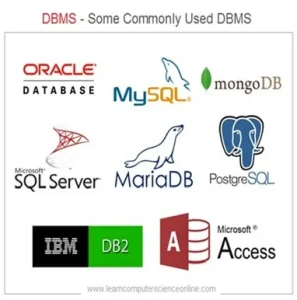
- Recommended Database: Start with PostgreSQL. It’s open-source, powerful, standards-compliant, and widely used in industry. It’s the perfect learning tool.
- What to Learn:
- Database Design:
- What to Learn: Normalization (1NF, 2NF, 3NF), Entity-Relationship (ER) Diagrams, Identifying Primary and Foreign Keys.
- How to Learn: Draw out schemas for real-world scenarios (e.g., a library system, an e-commerce store).
Phase 2: Deepen Your Knowledge & Get Practical (Months 4-6)
Now, you understand how to query and design. Let’s see how it works in the real world.
- Internals & Performance:
- What to Learn:
- Indexes: How they work (B-Trees), when to use them, their impact on read/write performance.
- Query Execution Plans: Learn to use
EXPLAIN(orEXPLAIN ANALYZEin PostgreSQL) to see how the database executes your query. This is a superpower. - Transactions: ACID properties (Atomicity, Consistency, Isolation, Durability).
- How to Learn: Read the documentation for your database (e.g., PostgreSQL docs on indexing). Try to optimize slow-running queries from your practice.
- What to Learn:
- Introduction to a Cloud Platform:
- Pick one: AWS, Google Cloud, or Microsoft Azure. They all have free tiers.
- What to Do: Create a free account, launch a managed database service (e.g., AWS RDS for PostgreSQL, Azure SQL Database, or Google Cloud SQL). Connect to it from your local machine. This is a critical, real-world skill.
Phase 3: The Modern Landscape – Beyond Relational (Months 6-12+)
This is where you become a well-rounded engineer for 2026.
- The “NoSQL” Universe: Understand the main categories and their use cases.
- Document Databases: Perfect for flexible, hierarchical data.
- Learn: MongoDB or AWS DynamoDB.
- Use Case: User profiles, product catalogs, content management.
- Key-Value Stores: The simplest NoSQL model, extremely fast.
- Learn: Redis.
- Use Case: Caching, session storage, real-time leaderboards.
- Column-Family Stores: Optimized for queries over large datasets.
- Learn: Apache Cassandra or ScyllaDB.
- Use Case: Time-series data, write-heavy applications (e.g., IoT sensor data).
- Graph Databases: For deeply interconnected data.
- Learn: Neo4j.
- Use Case: Social networks, fraud detection, recommendation engines.
- Document Databases: Perfect for flexible, hierarchical data.
- The “NewSQL” / Distributed SQL Wave:
- What it is: Databases that combine the SQL interface with the horizontal scalability of NoSQL systems.
- Why it’s important for 2026: This is the future of transactional systems that need to scale globally.
- Learn: Google Cloud Spanner, CockroachDB, or YugabyteDB. Pick one to understand the concepts.
Phase 4: Advanced Topics & Specialization (2025-2026)
Choose your own adventure based on your interests.
- Data Engineering Focus:
- Data Warehousing: Snowflake, BigQuery, Amazon Redshift. Learn about ELT/ETL processes.
- Batch Processing: Apache Spark (with DataFrames API).
- Stream Processing: Apache Kafka, Apache Flink.
- Developer / Backend Focus:
- ORMs (Object-Relational Mappers): Learn one like SQLAlchemy (Python) or Hibernate (Java) to understand how applications interact with databases.
- Connection Pooling: (e.g., PgBouncer).
- Database Migrations: Using tools like Flyway or Liquibase.
- Administration / Ops Focus:
- Backup & Recovery Strategies.
- High Availability & Replication.
- Monitoring & Performance Tuning at the systems level.
Project-Based Learning: The Glue That Holds It All Together
Theory is useless without practice. Build these projects as you learn:
- Beginner: A personal blog with users, posts, and comments (SQL).
- Intermediate: An e-commerce site with products, orders, and user carts. Add a Redis cache for product pages.
- Advanced:
- A real-time analytics dashboard (use a time-series DB or a data warehouse).
- A social network with a “friends-of-friends” recommendation feature (use a Graph DB).
- A globally distributed application using CockroachDB or DynamoDB Global Tables.
Recommended Learning Resources for 2026
- Books: “Designing Data-Intensive Applications” by Martin Kleppmann (the bible for modern systems). “SQL Performance Explained” by Markus Winand.
- Online Platforms: Coursera, Udacity, Pluralsight. Look for courses updated in the last year.
- Hands-On Labs: A Cloud Guru (for cloud-specific database courses), Qwiklabs.
- Community: Follow blogs and engineers from companies like Databricks, Confluent, MongoDB, and Cockroach Labs.
Summary: Your Learning Path to 2026
| Timeframe | Focus Area | Key Technologies |
|---|---|---|
| 2024 (Now) | Core SQL & Relational Theory | PostgreSQL, MySQL |
| Early 2025 | Performance & The Cloud | Indexing, Query Plans, AWS/Azure/GCP |
| Mid-Late 2025 | NoSQL & Distributed SQL | MongoDB, Redis, Cassandra, CockroachDB |
| 2026 | Specialization & Advanced Topics | Data Engineering (Spark, Kafka) or Advanced Ops |
Start today, be consistent, and always be building. By 2026, you will have a highly valuable and future-proof skill set. Good luck.
[INSERT_ELEMENTOR id=”17″]