
The Core Distinction: UI vs. UX
First, it’s crucial to understand the fundamental difference:
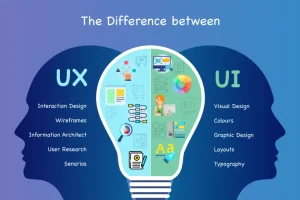
- UX (User Experience) Design is about the overall feel of the experience. It’s the process of creating products that are meaningful, relevant, and easy to use. It’s focused on the user’s journey to solve a problem.
- UI (User Interface) Design is about the look and layout of the product. It’s the process of designing the visual and interactive elements—the screens, buttons, icons, and spacing. It’s the polish on top of the UX foundation.
Think of it this way: UX is the engineering of a car (how it drives, feels, and functions), while UI is the interior and exterior styling (the paint, leather seats, and dashboard layout).
Types of UX Design Specializations
UX design is a multi-stage process, and designers often specialize in one part of it.
1. UX Research
This is the foundation. UX Researchers focus on understanding user behaviors, needs, and motivations through observation and feedback.
- Methods: User interviews, surveys, usability testing, A/B testing, field studies.
- Key Question: “Who are our users, what do they need, and what problems are they facing?”
2. Information Architecture (IA)
IA designers structure and organize information in a clear and logical way. They decide how content is categorized and connected.
- Key Deliverables: Sitemaps, user flows, content hierarchies.
- Key Question: “How do we organize this information so users can find what they need easily?”
3. Interaction Design (IxD)
IxD designers focus on how users interact with the product. They design the specific interactions, like what happens when you click a button or swipe a card.
- Key Deliverables: Wireframes, interactive prototypes.
- Key Question: “How should this element respond to the user to feel intuitive and satisfying?”
4. UX Writing / Content Design
This role focuses on the words and language used within the product. UX Writers craft clear, concise, and helpful text that guides the user.
- Key Deliverables: Button labels, error messages, onboarding instructions.
- Key Question: “What words should we use to help the user complete their task successfully?”
Types of UI Design Specializations
UI design also has its own set of specializations, primarily focused on visual craft.
1. Visual Design
This is the most common type of UI design. Visual designers are responsible for the aesthetics of a product.
- Focus: Color palettes, typography, iconography, spacing, and imagery.
- Key Question: “How do we make this interface visually appealing and aligned with the brand?”
2. Motion Design / Animation Design
These designers create the animations and micro-interactions that make a product feel alive and responsive.
- Focus: Loading animations, button hover effects, screen transitions.
- Key Question: “How can animation improve the user’s understanding and delight them?”
3. Brand UI Design
This role bridges the gap between the company’s brand identity and the digital product. They ensure the product’s look and feel is consistent with the overall brand.
- Focus: Creating and maintaining a design system, ensuring brand colors and fonts are used correctly.
- Key Question: “How do we translate our brand’s personality into our digital interfaces?”
Hybrid & Cross-Functional Roles
In many companies, especially startups, roles are blended. These are common titles you’ll see in job postings.
1. Product Designer
This is a broader term that often encompasses the entire process from research to UI. A Product Designer is responsible for the design of a product from start to finish, considering both user needs and business goals.
2. UX/UI Designer (The Most Common Hybrid)
This is a generalist role where the designer is expected to handle both the user experience (research, wireframing) and the user interface (visual design) aspects.
3. Service Designer
This is a macro-level role that looks at the entire customer journey across multiple touchpoints, both digital and physical (e.g., using an app, receiving an email, talking to customer service).
Specialized & Emerging Areas
As technology evolves, so do design specializations.
- VR/AR Design: Designing immersive, 3D user experiences for virtual and augmented reality.
- Voice User Interface (VUI) Design: Designing for voice-activated systems like Alexa or Google Assistant.
- UX for AI/ML: Designing interfaces for systems that learn and adapt, focusing on transparency and user trust.
- Accessibility Design: Specializing in making products usable for people with a wide range of disabilities.
- Game UI Design: Designing the heads-up display (HUD), menus, and interactive elements within video games.
Summary Table
| Type of Design | Primary Focus | Key Question |
|---|---|---|
| UX Research | User needs & behaviors | “What do our users need?” |
| Information Arch. | Structure & organization | “How do we organize this information?” |
| Interaction Design | User interactions & flow | “How should this feel to use?” |
| UX Writing | Language & content | “What words should we use?” |
| Visual UI Design | Aesthetics & branding | “How do we make this look good?” |
| Motion Design | Animation & feedback | “How can motion guide and delight?” |
| Product Design | End-to-end product creation | “How do we solve this user/business problem?” |
In practice, the lines are often blurred, and a great designer usually has skills that span multiple of these areas, with a deep specialization in one or two.