

The Simple Analogy: Building a House
Think of a website or a web application (like Facebook, Amazon, or your bank’s site) as a house.
- Web Development is the process of building that house. It involves everything from laying the foundation and putting up the walls to installing the electricity and plumbing.
The Formal Definition
Web development is the work involved in creating, building, and maintaining websites and web applications that run online in a web browser. It can range from developing a simple single static page of plain text to complex web-based applications, electronic businesses, and social network services.
The Three Main Layers of Web Development
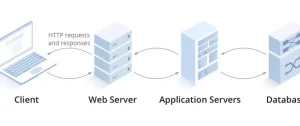
Most modern web development is divided into three key areas, often referred to as the “client-server-database” model or the “frontend-backend-database” model.
1. Front-End Development (The “Client-Side”)
This is everything the user sees and interacts with directly in their browser. It’s the visual part of the website.
- Analogy: The interior design, paint, furniture, and layout of the house—anything a visitor can see and touch.
- Key Technologies:
- HTML (HyperText Markup Language): The skeleton and structure of the page (e.g., headings, paragraphs, images).
- CSS (Cascading Style Sheets): The style and presentation. It makes the HTML look good with colors, fonts, and layout.
- JavaScript: The interactivity. It makes the website dynamic and responsive (e.g., sliders, pop-ups, form validation, updating content without reloading the page).
- Role: Front-End Developer or UI/UX Developer.
2. Back-End Development (The “Server-Side”)
This is the part that works behind the scenes. The user doesn’t see it, but it powers the website. It’s the logic, database interactions, and server configuration.
- Analogy: The electrical wiring, plumbing, and foundation of the house. It’s essential, but hidden behind the walls.
- Key Responsibilities:
- Server: The computer that hosts the website files and code.
- Application: The logic that runs on the server, written in back-end languages.
- Database: Where all the data is stored (e.g., user profiles, product information, blog posts).
- Key Technologies:
- Programming Languages: Python, PHP, Ruby, Java, C#, Node.js (JavaScript on the server).
- Frameworks: Django (Python), Laravel (PHP), Ruby on Rails (Ruby), Spring (Java).
- Databases: MySQL, PostgreSQL, MongoDB.
- Role: Back-End Developer.
3. Full-Stack Development
A Full-Stack Developer is someone who is comfortable working with both the front-end and the back-end. They have a broad understanding of how the entire web development process works, from the user interface all the way down to the database.
- Analogy: A general contractor who can both design the interior and handle the plumbing and electrical work.
The Web Development Process in a Nutshell
A typical project might look like this:
- Planning & Analysis: What is the goal of the website? Who is the target audience?
- Design: Creating wireframes and mockups of what the site will look like (often done by a UI/UX Designer).
- Front-End Development: Converting the designs into a working web page using HTML, CSS, and JavaScript.
- Back-End Development: Building the server, application logic, and database to make the site functional.
- Testing: Checking for bugs, compatibility across different browsers, and performance issues.
- Deployment: Launching the website on a server so the public can access it.
- Maintenance: Updating content, fixing bugs, and adding new features over time.
Why is Web Development Important?
- Business Presence: Every business, from a local shop to a multinational corporation, needs a website.
- E-Commerce: It powers online shopping, which is a massive part of the global economy.
- Communication & Information: It’s the foundation of blogs, news sites, and social media.
- Web Applications: Tools like Google Docs, Trello, and Netflix are all complex web applications built by web developers.
In short, web development is the engine that powers the modern internet. It’s a dynamic and highly in-demand field that combines creativity with technical problem-solving.