
What is SEO? The Simple Definition
Search Engine Optimization (SEO) is the process of optimizing a website to get more organic traffic from search engines.
When you type on Google, you see results that consist of two parts – the Paid part and the organic results. The former is the paid advertisement, which appears at the top and bottom of the search results, labeled clearly as “Ad.” The latter is the organic result – the list of websites that have appeared on the search engine results pages (SERPs).
SEO is what businesses do to improve their search engine result ranking. It refers to the tactics used to increase the number of website visitors.
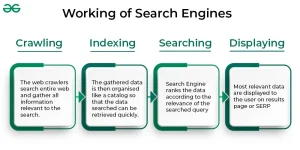
The Core Concept: Understanding the Search Engine « SEO
Search engines are like exceptionally efficient, intelligent librarians. Their job is to answer your query — the question you type into the search box — by returning the most relevant “book” (web page) in their “library” (the World Wide Web).
SEO is about making sure your “book” is organized, authoritative and easy to understand so that the librarian has no choice but to recommend it.
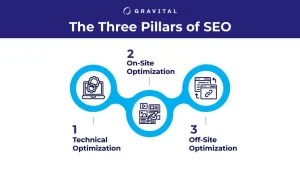
The Three Main Pillars of SEO
SEO practice is usually divided into three categories:
1. Technical SEO
2. On-Page SEO
3. Off-Page SEO
Technical SEO refers to the ways of improving a website’s infrastructure to make it easier for search engines to parse and index. It refers to SEO practices that are not visible to the end-user but are crucial for the optimization process.
The most common technical SEO practices include improving the website’s performance, making it mobile-friendly, and ensuring its security (HTTPS). Other technical SEO tasks include optimizing the URL structure, creating a robots.txt file and a Sitemap, and fixing broken links.
On-Page SEO denotes optimization practices that are visible to the end-user. It refers to improving the content and the coding of a webpage to make it more attractive and easier to read. Some common on-page SEO practices are:
Content creation – coming up with quality content that would entice the user to stay on the page;
Using keywords – including relevant keywords in the content, titles, and headings;
Optimizing titles and descriptions – coming up with attractive titles and descriptions for each page;
Images – optimizing the images in terms of size and file name and including description;
Internal linking – including links to other relevant pages within the website.
Finally, off-page SEO encompasses all optimization activities that take place away from the website. This is usually the work of other website owners in boosting another site’s profile through backlinks. The most common off-page SEO practices are:
Backlink building – getting webmasters to post backlinks to your site on their pages;
Social signals – encouraging people to share your content on social media;
Mentions – getting your brand name posted on other websites, with or without backlinks.
Why is SEO Important?
Most of the Traffic is Organic: More than 50% of traffic comes from organic results. It is the highest and most steady source.
Establishes Credibility: The users trust organic results more than the advertisements. The higher your page is in the organic search results, the more credible it seems to the users on the topic of the page.
Much More Cost Effective: No money is spent on the organic traffic, unlike the advertisements, where every click on the ad is a price to pay.
Long Term: The optimizations made to the page will have a long-lasting effect and keep giving traffic for a long time. Whereas with the advertisements, when the money stops, the traffic stops too.
A Simple Analogy Involving The Physical Store
Technical SEO equals holding broad aisles, proper lighting, and informative signs.
On-Page SEO signifies having an organized product distribution, signposts with prices, and knowledgeable sellers.
Off-Page SEO means gathering excellent reviews in the local newspaper, having influential partners, and getting endorsements from other stores.
An effective combination of the above-mentioned practices leads to achieving the primary goal of any business — the constant flow of satisfied customers. Failing to address any of these aspects results in a slow clientele growth and a deteriorated shopping experience.
The Most Critical Truth About SEO These Days
The mentioned practices should be highly effective; however, they are not the ultimate goal of SEO. In reality, your SEO efforts should be geared towards fulfilling the user intent.
Google’s algorithm is intelligent enough to recognize websites that offer the best quality and experience on the web. As such, it rewards such resources with higher rankings.