
Foundational & University Courses (Timeless)
These courses focus on first principles. They are the bedrock of the field and will not be outdated.

1. Stanford CS229: Machine Learning (by Andrew Ng)
- Why it will still be relevant in 2026: This is the classic that started it all for many. While it covers more than just deep learning, its rigorous mathematical foundation (linear algebra, probability, calculus) is eternal. Understanding these basics is more important than knowing the latest niche model.
- Where to find it: Search for “Stanford CS229” on YouTube. Official Stanford lectures are available.
2. MIT Introduction to Deep Learning (6.S191)
- Why it will still be relevant in 2026: This is an annual course that is updated every year. They consistently refresh the content to include the latest research. The 2023/2024 versions already heavily feature Transformers, LLMs, and Diffusion Models. This is your best bet for a university course that will have a direct 2026 successor. Just search “MIT 6.S191 2026” when the time comes.
- Where to find it: Search “MIT 6.S191” on YouTube. The MIT channel posts the new lectures each year.
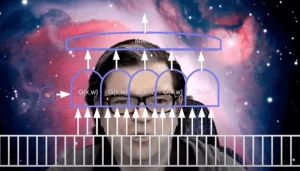
3. NYU Deep Learning (DS-GA 1008)
- Why it will still be relevant in 2026: Taught by Yann LeCun (a Turing Award winner and Chief AI Scientist at Meta), this course is deeply theoretical and comprehensive. It dives into the why behind the algorithms. The fundamental principles taught here are timeless.
- Where to find it: Search for “NYU Deep Learning DS-GA 1008” on YouTube. The official NYU channel has playlists.
YouTube Creator Courses (High-Quality & Engaging)
These creators are excellent at explaining complex topics intuitively and are likely to still be producing top-tier content in 2026.
1. 3Blue1Brown’s “Neural Networks” Series
- Why it will still be relevant in 2026: This isn’t a “how to code” course. It’s a visual and intuitive journey into the mathematics of neural networks. His explanations of concepts like gradient descent and backpropagation are legendary and will never be outdated. Watch this first to build a rock-solid intuition.
- Channel: 3Blue1Brown
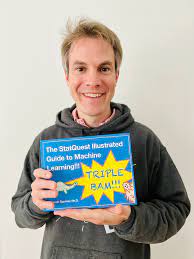
2. StatQuest with Josh Starmer Data Science Courses
- Why it will still be relevant in 2026: Josh Starmer has a unique talent for making complex machine learning and statistics concepts incredibly clear with his “StatQuest” style. His videos on fundamental concepts like Gradient Descent, LSTMs, and Transformers are timeless and essential for beginners.
- Channel: StatQuest

3. Andrej Karpathy’s Content Deep Learning course
- Why it will still be relevant in 2026: Former Director of AI at Tesla and one of the best educators in the field. His “Neural Networks: Zero to Hero” series is a masterclass in building neural networks from scratch. His intuitive and code-first approach is invaluable. He is almost guaranteed to have relevant, advanced content in 2026.
- Channel: Search for “Andrej Karpathy” on YouTube. His personal channel is a goldmine.
What’s New in 2026? (How to Stay Updated)
The field moves fast. In 2026, you’ll want to supplement the foundational courses above with the latest developments. Here’s how to find that content:
- Look for “LLM” and “Large Language Model” Courses: The Transformer architecture will still be dominant. Look for courses that build on this, focusing on fine-tuning, RLHF, and building applications with LLMs.
- Search for “Multimodal AI” and “Diffusion Models”: Image generation (like Stable Diffusion, DALL-E) and video generation will have advanced significantly. Courses on these topics will be in high demand.
- Follow the Key Institutions: As 2026 approaches, search directly on the YouTube channels of:
- Stanford Online
- MIT OpenCourseWare
- DeepMind
- Microsoft Research
- OpenAI
- Check for “State-of-the-Art” Summaries: Channels like Yannic Kilcher and CodeEmporium often break down the latest AI research papers in an accessible way. These will be crucial for staying on the cutting edge.
Your Learning Path for 2026
Here is a suggested step-by-step plan:
- Build Intuition (Start Here):
- Watch 3Blue1Brown’s Neural Networks series.
- Watch key StatQuest videos on fundamental concepts.
- Get a Rigorous Foundation (Choose One):
- Follow the latest MIT 6.S191 course from 2025 or 2026.
- Or work through Andrew Ng’s CS229 for a stronger math-focused base.
- Learn to Code (Hands-On):
- Follow Andrej Karpathy’s “Zero to Hero” series, coding along in Python/PyTorch.
- Use frameworks like PyTorch or TensorFlow—their official channels also have great tutorials.
- Specialize and Stay Updated (2026 and Beyond):
- Based on your interests (Computer Vision, NLP, Robotics), find specialized playlists.
- Subscribe to the research-focused channels mentioned above to keep up with the latest breakthroughs.
By combining timeless foundational knowledge with a strategy to find the latest content, you’ll be perfectly set up to tackle Deep Learning in 2026. Happy learning.