
Foundational & University Courses (Timeless)

These courses are focused on first principles. They are the foundation of the field and will never become obsolete.
1. Stanford CS229: Machine Learning (by Andrew Ng)
Why it will still be relevant in 2026: This course, which has launched countless careers in the ML/DL space, represents the canonical beginning of one’s journey into the field. It covers more than just the “deepest” part of the tower — and that’s a good thing! Building a foundation in linear algebra, probability theory, and calculus will serve you much better than trying to memorize the latest fads in neural networks architectures.
How to find it: Search for “Stanford CS229” on YouTube. The Stanford channel will have all the course lectures.
2. MIT Introduction to Deep Learning (6.S191)
Why it will still be relevant in 2026: This is an annual course that is updated every year to include the latest advances. The syllabus for 2023/2024 makes it clear that they are diving deep into Transformers, LLMs, and Diffusion Models. This is the closest thing you can find to a university course that will directly prepare you for 2026. Just search for “MIT 6.S191 2026” when it becomes available.
How to find it: Search for “MIT 6.S191” on YouTube. The MIT channel will have all the course lectures yearly.
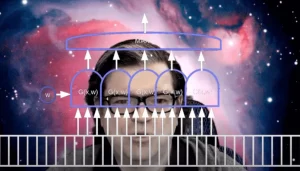
3. NYU Deep Learning (DS-GA 1008)
Why it won’t become irrelevant by 2026: This course is taught by Yann LeCun, a Turing Award winner, and the Chief AI Scientist at Meta. The course is extremely theory-heavy and designed to explain the theory behind the algorithms. All the fundamentals are eternally relevant.
Where to find it: Search for “NYU Deep Learning DS-GA 1008” on YouTube. The NYU channel has playlists.
YouTube Creator Courses (High quality and engaging)
These creators have a talent for explaining concepts in a way that makes them feel easy to understand and will continue to do so in 2026.
1. 3Blue1Brown’s “Neural Networks” series
Why it will still be relevant in 2026: This is not a coding tutorial, it is a mathematical one. He breaks down the topics in a way that makes it easy to grasp why certain techniques like gradient descent or backpropagation work. His lessons on math will never become obsolete. Watch this one to get an intuitive understanding of the theory.
Channel: 3Blue1Brown
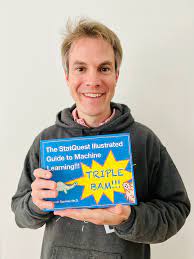
2. StatQuest with Josh Starmer Data Science Courses
Why it will still be relevant in 2026: Starmer has a rare talent for breaking down complicated machine learning and statistics topics, making them accessible to everyone through his ‘StatQuest’ series. His tutorials on fundamental concepts like Gradient Descent, LSTMs, and Transformers will remain relevant and valuable resources.
Channel: StatQuest

3. Andrej Karpathy’s Content Deep Learning course
The reasons it will still be relevant in 2026: The former director of Tesla’s AI department and an excellent educator in the field of neural networks. His “Neural Networks: Zero to Hero” tutorial is a real masterclass in creating neural networks from scratch. The guy has an intuitive and coding-based approach to the subject. He is almost certainly going to have something relevant and advanced enough for 2026.
Channel: You can find his channel by searching for “Andrej Karpathy” on YouTube. This guy’s personal account is a gold mine.
What’s New in 2026? (How to stay updated)
The field is evolving at a rapid pace, so you’ll want to complement all of these courses by getting up to speed on the latest innovations in 2026.
Here’s how to find them:
Search for “LLM” and “Large Language Model” Courses: The transformer architecture will continue to dominate the field, so look for courses that explore techniques like fine-tuning, RLHF, and building applications on top of LLMs
Search for “Multimodal AI” and “Diffusion Models”: Both image-to-image and video diffusion models will see incredible leaps in quality and versatility in 2026. Expect to see a rise in courses centered around Stable Diffusion, DALL-E, and other similar frameworks
Search the Channels of the Foundational Organizations: Around 2026, start searching the YouTube catalogs of these organizations to see what courses they’re offering:
Stanford Online
MIT OpenCourseWare
DeepMind
Microsoft Research
OpenAI
Search for “State-of-the-Art” Courses: Channels like Yannic Kilcher’s and CodeEmporium often have excellent summaries of the latest research papers in the field. These can be critical for gaining an entry-level understanding of what’s going on in the field
Your Learning Path for 2026
My idea of a proper learning path would include the following steps:
Build Intuition (Start Here):
Watch 3Blue1Brown’s Neural Networks series,
and the most popular StatQuest videos about the topic.
Get a Rigorous Foundation (Pick 1):
Take the latest MIT 6.S191 course (2025/2026),
or study Andrew Ng’s course CS229 to get more math-centric knowledge.
Learn to Code (Get Hands-On):
Learn the basics by following along the “Zero to Hero” series by Andrej Karpathy,
and practice with Python/PyTorch (or another framework of your choice).
Most frameworks have excellent official YouTube channels with tutorials.
Specialize and Stay Updated (2026+):
Depending on your research interests (Computer Vision, NLP, Robotics, etc.), seek out relevant playlists.
Subscribe to channels with research highlights mentioned above to stay up-to-date with the latest findings.
With this, you can build a solid foundation in Deep Learning in 2026. Good luck!