
The Hypothetical “Neural Networks 2026” Curriculum
A course offered in 2026 would presumably build upon the basics and move quickly to cutting-edge techniques suitable for direct application in the industry. It would provide little context about what constitutes a layer – the students are expected to know it already, and instead focus on how to train a 500 billion parameter model in practice.
Here is my hypothetical syllabus:
Module 1: Foundational Review and Modern Stack (PyTorch/TensorFlow etc) 2026 Edition
Beyond PyTorch and TF: JAX/Flax and the compiler stack
Intro to Distributed Training: Basic concepts to build large-scale ML systems right
The “Transformer is the CPU” Paradigm: The architecture that rules the world
Module 2: Cutting Edge Architectures
Mixture-of-Experts: The theory and practice of scaling ML
Multimodal Foundational Models: Unified vision-language-text architectures (GPT-4V/LLaVA-style)
Retrieval-Augmented Generation (RAG) and Agent Architectures: How to make models that use search engines and coding sandboxes
Module 3: Advanced Training Techniques
RLHF and DPO (Direct Preference Optimization): How to fine-tune models using human feedback, and why DPO is now the method of choice
Low-Rank Adaptation (LoRA/QLoRA) and its successors: How to fine-tune huge models on your GPU
Long Context and Reasoning: Mamba, SSMs, and other approaches to achieve trillions tokens context and enhanced reasoning
Module 4: Deployment, Safety, and Other Topics
Model Compression and Quantization: Making 70B parameter models fit on your phone
Robustness and Interpretability: Why large language models are like big trucks – hard to steer and full of surprises
AI Safety and Red Teaming: How to find and fix vulnerabilities and dangerous model behaviors
Ethics of Open- vs Closed-Source AI
The Best Current YouTube Courses to Prepare for 2026
To have a solid understanding of the 2026 course, you need a good basis. Here are the best resources currently available that will get you there.
1. For the Absolute Beginner / Intuitive Understanding
Channel: 3Blue1Brown
Series: Neural Networks
Why it’s great: Best visual and intuitive introduction to what neural networks are and how they learn. It’s a prerequisite for any technical course. It builds a deep, conceptual understanding that is timeless.

2. For the Rigorous, University-Style Foundation
Channel: Sebastian Raschka
Series: Introduction to Deep Learning and Modern Machine Learning with PyTorch
Why it’s great: Sebastian is a leading author and educator (Lightning AI). His content is incredibly up-to-date, practical, and covers everything from the basics to LLMs, vision transformers, and fine-tuning. This is probably the single most relevant and comprehensive current course.
Channel: Andrej Karpathy
Series: Neural Networks: Zero to Hero
Why it’s great: A legendary course from a former Director of AI at Tesla. He builds everything from scratch, starting with a single neuron and progressing to GPT. You will understand the “atoms” of deep learning. His “Let’s build GPT” video is a masterclass.
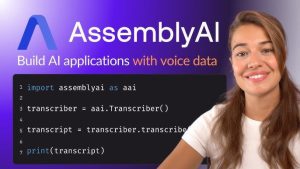
3. A Mathematical Approach for the Mathematically Inclined
Channel: The AssemblyAI Scholar (previously “The Epiphany Channel”)
Series: Deep Learning Fundamentals
A great resource if you’re looking to understand the mathematical nuances of machine learning: backprop, calculus, linear algebra, etc. This channel serves as the perfect bridge between intuitive explanations and mathematical rigor.

4. For Specialized, Advanced Topics (The 2026 Preview)
Channel: Yannic Kilcher
Content: Paper explanations of the latest AI research.
Why it’s great: To get ahead of what will be in the 2026 course, watch his breakdowns of papers on Mixture-of-Experts, Mamba, DPO, etc. It’s a sneak peek.
Channel: AI Coffee Break with Letitia
Content: Concise, clear explanations of complex AI concepts and new research papers.
Why it’s great: For quickly digesting a new architecture or technique.
Your Own Roadmap to Learn ML Field in 2026
Watch 3Blue1Brown to understand the intuition behind the algorithms
Then study andrej karpathy’s zero to hero course to learn the required programming and mathematical skills needed to be productive in the field
After that, check out the amazing material from sebastian raschka on his channel to get an up-to-date and practical overview of the field using pytorch.
Use the assemblyAI scholar to fill in the math gaps if any
Subscribe to yannic kilcher and letitia to keep up with the latest research directions for the 2026 course
By following this roadmap, you would not only be prepared for the “neural networks 2026” course, but you can also actively contribute to the field.